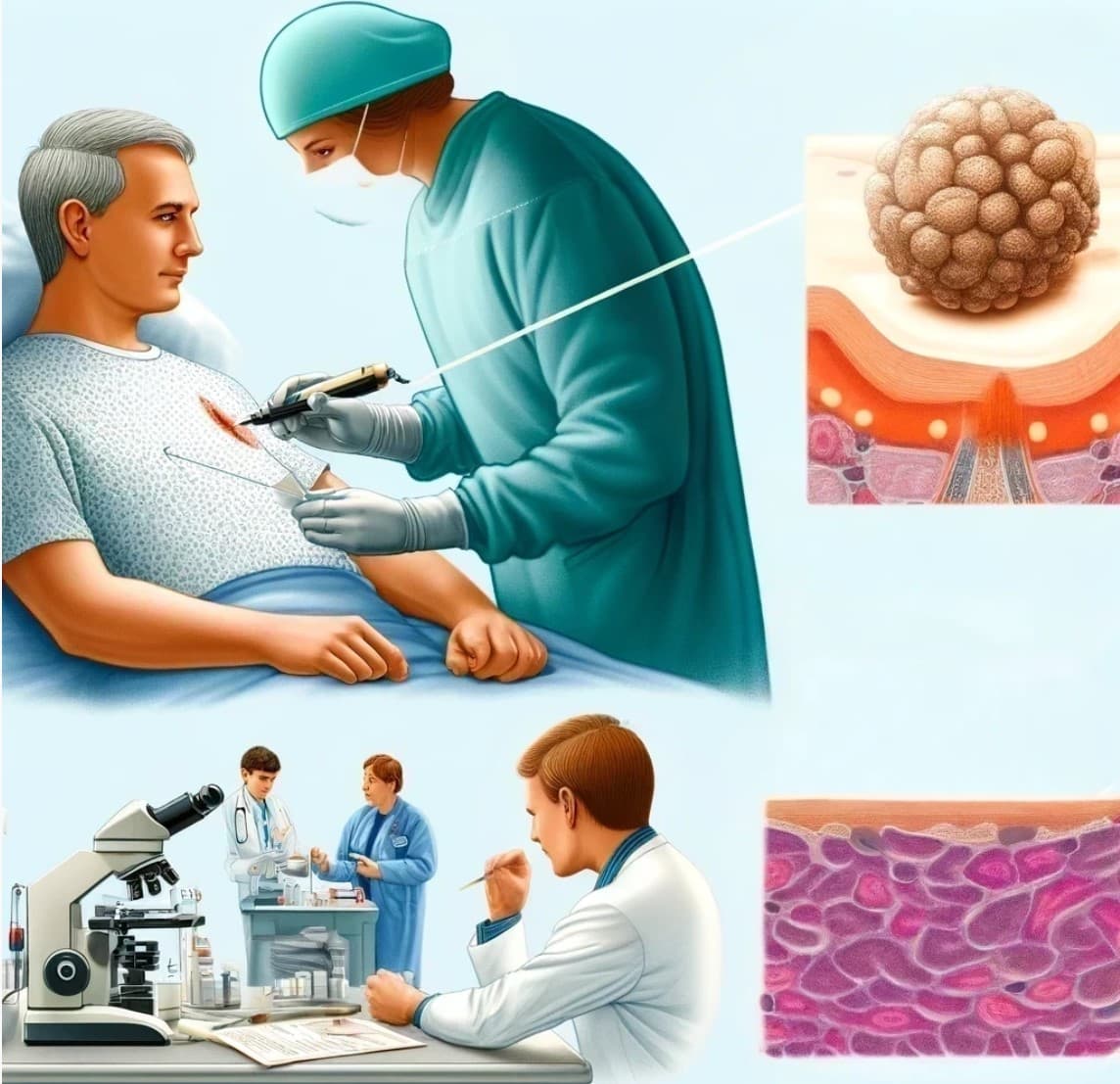
A biopsy is a central tool in the diagnosis and treatment of cancer, providing crucial information about the tumor and enabling the selection of the most appropriate treatment.
A biopsy involves obtaining a tissue sample from the tumor, which is examined under a microscope to determine whether the tumor is benign or malignant.
Biopsy analysis helps identify the exact type of cancer, allowing for precise treatment matching, and assists in determining the stage of the disease, which influences treatment choice and prognosis assessment.
Procedure for Taking a Biopsy
After reviewing previous imaging tests, the safest site for the biopsy is selected,
ensuring the highest chance of a definitive diagnosis.
Before the biopsy, the patient must provide laboratory tests, including blood count and coagulation functions. Patients taking blood thinners medications usually need to stop them according to the physician's instructions.
During the procedure, the biopsy site is disinfected and numbed with local anesthesia to minimize discomfort.
The interventional radiologist inserts a needle under ultrasound or CT guidance to ensure maximum accuracy.
A thinner needle is inserted through the initial needle to obtain the tissue sample.
After the tissue is collected, the thin needle is removed, and an embolic agent is injected through the remaining needle to close the biopsy tract, reducing the risk of bleeding.
The biopsy is sent to the pathology lab or another lab as requested by the treating physician and/or patient.
After the biopsy, the patient remains in recovery for about 2-3 hours to ensure there are no complications.
Common Types of Biopsies
-
Fine Needle Aspiration (FNA): A very thin needle is used to extract cells from the tumor
-
Core Needle Biopsy: A thicker needle is used to extract larger tissue samples
Among the advantages are
-
Allows for an accurate diagnosis of the tumor and a determination of whether it is benign or malignant.
-
Assists in identifying the specific type of cancer and determining the stage of the disease for optimal treatment.
-
The use of imaging guidance, ensures maximum accuracy in tissue sampling and high safety.
-
Performing the procedure under local anesthesia significantly reduces discomfort for the patient.
-
Injecting an embolic agent to close the biopsy track at the end of the procedure helps reduce the risk of bleeding.
Disadvantages and risks
-
There is a possible risk of bleeding at the biopsy site despite the use of closure materials.
-
The procedure involves a temporary feeling of discomfort that requires the use of local anesthesia.
-
Patients must stop blood thinners before the procedure per physician instructions.
-
A stay of approximately 2 to 3 hours in the recovery room is required after the procedure for observation.
More on interventional radiology
Back to all articles